Meroë
On this page
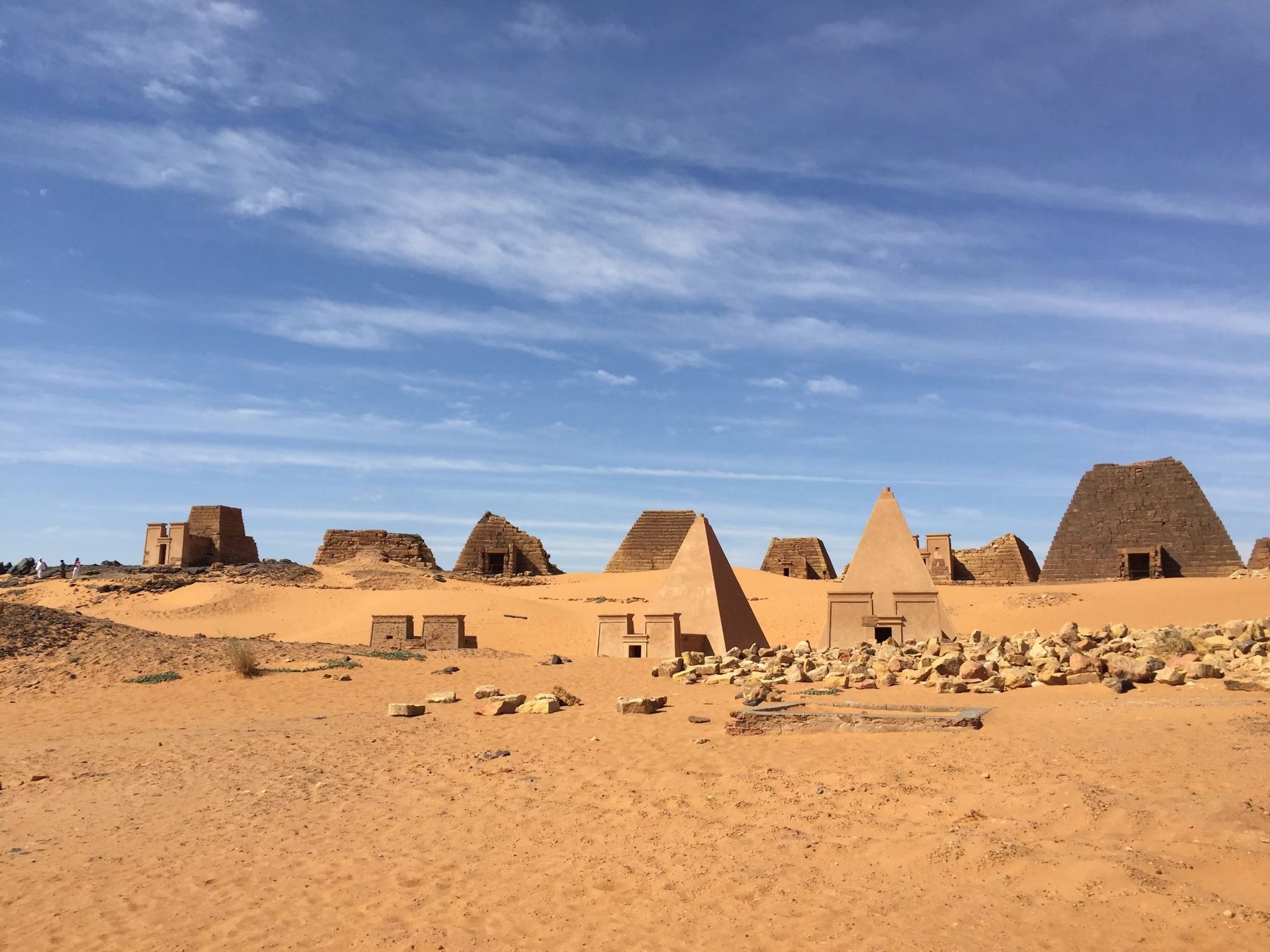
The royal city of Kush, its necropolises holding more than 200 graves in the open desert.
The archive documents heritage; it does not confirm that travel is safe. Read current travel advice before planning a journey. Travel advice
- Status
- UNESCO World Heritage, inscribed 2011 (ref 1336)
- Period
- 8th century BC – 4th century AD
- Region
- River Nile State, east bank
- Tallest pyramid
- About 30 m
- Best hour
- First light, before 7am
A capital in the sand
UNESCO inscribed the Archaeological Sites of the Island of Meroe in 2011, describing the area between the Nile and the Atbara as the heartland of the Kingdom of Kush — a major power in the ancient world from the 8th century BC to the 4th century AD. The property covers the royal city of Meroe itself and the religious sites of Naqa and Musawwarat es-Sufra.
More than 200 graves
The royal necropolises hold more than 200 graves, many of them marked by the steep-sided pyramids that became the emblem of Kush. It is worth being precise here: graves and standing pyramids are not the same count, and figures given for 'pyramids at Meroë' vary depending on what is being counted. What is not in dispute is the concentration — nowhere else on earth are royal pyramids gathered so densely.
A different geometry
A Kushite pyramid is not a smaller copy of an Egyptian one. The angle is far steeper, the base far narrower — many are under eight metres wide — and the tallest stands about 30 metres. Each was a marker above a burial chamber cut into the rock below, with an offering chapel attached to its eastern face, its walls carved with the dead ruler's passage.
The damage of 1834
In the 1830s the Italian doctor and treasure hunter Giuseppe Ferlini demolished the tops of a number of the pyramids searching for gold. He found a treasure in the pyramid of Queen Amanishakheto — jewellery now divided between museums in Berlin and Munich — and the flattened summits visible today are largely his work. It is the single most destructive episode in the site's modern history.
Iron and writing
Meroë was a centre of ironworking, and the slag heaps around the royal city are still visible. Its people wrote their own language, Meroitic, in two scripts adapted from Egyptian hieroglyphs. The alphabet has been read since Francis Llewellyn Griffith's work in the early twentieth century, but the language itself remains only partly understood — one of the significant undeciphered languages of the ancient world.
Going there
The pyramids stand about 200 km north-east of Khartoum, on the Atbara road. Check current official advice before considering any route. Come at first light: the low sun rakes across the dunes, the sandstone turns from grey to gold, and on most mornings you will have the necropolis to yourself.