Visit
Know before you go.
Sudan rewards the slow traveller. Here is the practical ground — the season, the regions, and the rhythm of a journey along the Nile.
Visit
Sudan rewards the slow traveller. Here is the practical ground — the season, the regions, and the rhythm of a journey along the Nile.
Sudan’s armed conflict makes travel dangerous. The UK FCDO advises against all travel to most of Sudan, with different advice for Hala’ib and Bir Tawil. Check your own government’s current advisory. This cultural archive does not confirm safe routes or access. Source checked 6 September 2026.
UK FCDO: Sudan travel adviceVisa and entry requirements depend on nationality and may change. Confirm the current visa process, passport validity and arrival registration with the Sudanese embassy responsible for your country before booking. Government entry guidance for British passport holders is linked below; it is not a rule for every nationality.
UK FCDO: entry requirements for British citizensThis archive does not provide live flight information. Confirm current airport operations, the exact route and entry requirements directly with the airline and Sudanese authorities. A published schedule does not establish that the journey or onward route is safe.
UK FCDO: Sudan safety and securityCool, dry, clear desert nights. Avoid the summer heat (Apr–Sep).
Sudanese Arabic is the lingua franca; English is widely understood.
Most sites are remote; travel with a local guide and a sturdy vehicle.
Hospitality is sacred. Dress modestly, ask before photographing people.
When to come
The Living Atlas
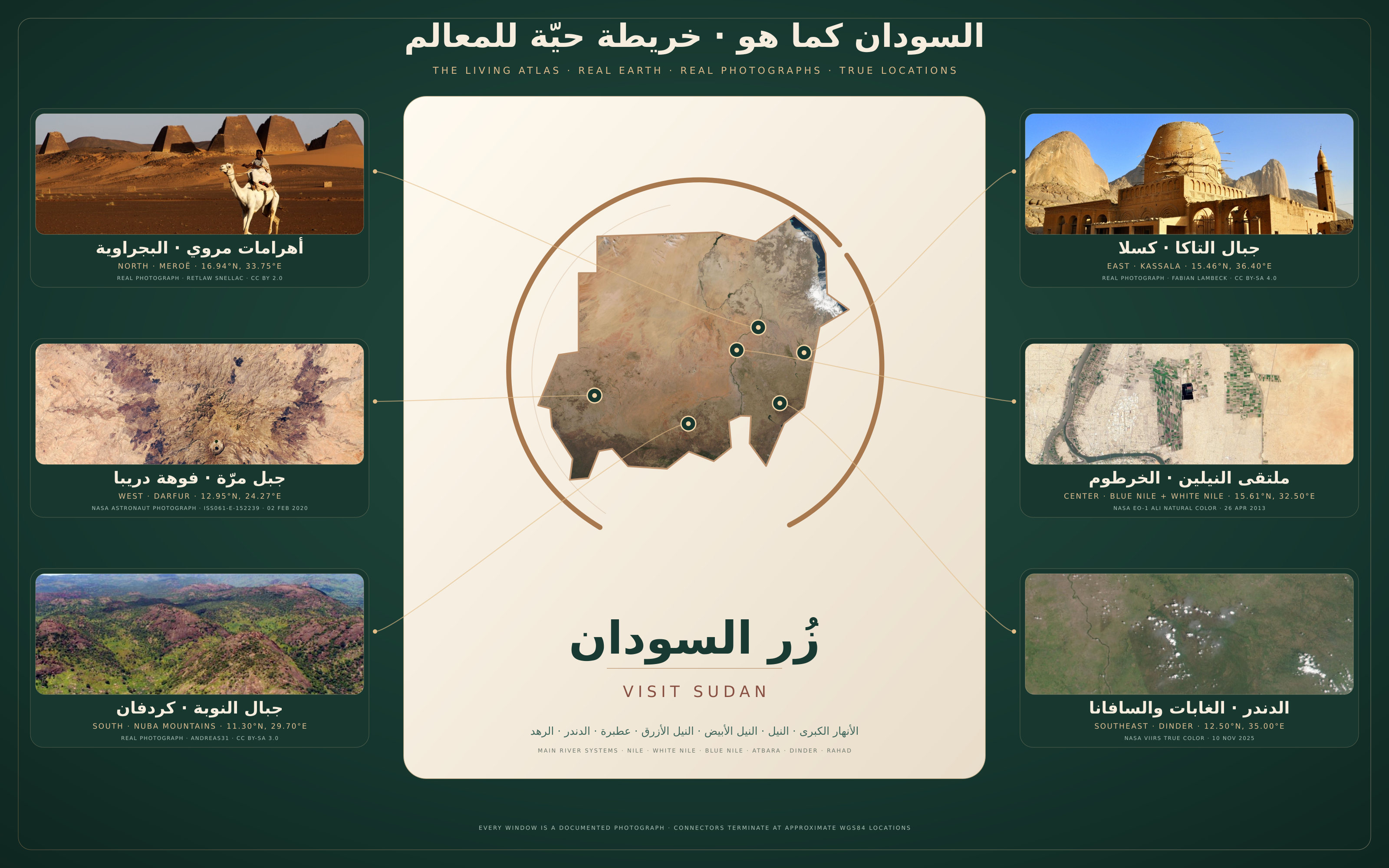
Shown according to Sudan's claim based on the 1902 administrative boundary. The territory is disputed and is under Egyptian de facto administration.
The regions
Meroë, Kerma, Karima & Jebel Barkal along the Nile.
Jebel Marra, Darfur — Sudan's highest, coolest land.
Port Sudan, Suakin & the granite domes of Kassala.
Khartoum & Omdurman, where the two Niles meet.
Practical essentials
As of 2026, Sudan is under armed conflict and most governments (US, UK, Australia and others) advise "Do Not Travel." Airport operations can change quickly; confirm them directly with your airline. This page is reference information for when travel becomes safe again — always confirm the current situation with your foreign ministry and a licensed tour operator before any journey.
Visa & entry
Nearly all visitors need a visa arranged before arrival through a Sudanese embassy, usually with a letter of invitation from a licensed tour operator or host. Fees vary by nationality — confirm the current amount and process with your nearest embassy.
Airports & airlines
This archive does not provide live flight information. Confirm current airport operations, the exact route and entry requirements directly with the airline and Sudanese authorities. A published schedule does not establish that the journey or onward route is safe.
Emergency numbers
Dial 999 for police and general emergencies, 998 for fire. Response can be slow and phone networks are sometimes cut during unrest — keep your embassy and tour operator's 24-hour numbers saved offline.
Money & basics
Sudan is a cash economy — foreign cards and ATMs generally do not work, so bring clean, new US dollars to exchange. Drive on the right. Friday is the weekend day.
Where to stay
Cities offer comfortable mid-range hotels; smaller towns have simple lokandas. Near Meroë and in the Bayuda you sleep in mobile desert camps under the stars. Most lodging is booked through your operator, not online.
Permits & consular
A Ministry of Tourism permit is needed to travel outside greater Khartoum (a separate one for Darfur), usually arranged by your operator. Carry several passport copies, register with authorities on arrival, and never photograph military or government sites.
Getting there
PZU · HSPN
On the Red Sea coast, this is the country's principal working international airport and the entry point most visitors now use.
KRT · HSSS
The historic national gateway, beside the city centre. Operations have been affected by the conflict. Do not plan a route through it without confirming with your airline.
Regional fields
Sudan's regional airfields serve domestic legs to the north, the east and the west. Schedules are thin and change without notice; confirm each leg directly with the carrier.
National flag carrier, founded 1946 — the oldest airline in the region still flying under its own name.
Sudanese carrier operating scheduled and charter services from Port Sudan.
Domestic and regional routes, including the western and eastern fields.
Sudanese operator on domestic and short regional sectors.
Egyptair, Ethiopian Airlines, Turkish Airlines, flydubai and Qatar Airways have served Sudan; routes and frequencies vary with the security situation.
The Living Archive is an independent, non-commercial cultural project. It is not a government body, a travel agency or a tour operator, it sells nothing and takes no bookings, and it is not affiliated with or endorsed by any of the institutions listed on this site.
Sudan has been in armed conflict since April 2023. Airport status, airline schedules, visa rules, exchange rates, prices and site access change frequently and at short notice, and much of the country is not currently safe for travel. Nothing here is travel, legal, medical or security advice. Before making any decision, verify with your own government's travel advisory, a Sudanese embassy or consulate, your airline, and the relevant authority on the Official page. Historical and cultural material is referenced to published sources; where an account is contested we say so.
Official sources
Entry rules, permits and currency controls change faster than any guide can follow. These are the Sudanese authorities that publish the real thing — go to them before you travel.

Tourism & antiquities
Site permits, filming permissions, the national tourism authority.
mociat.gov.sd →

Visas & registration
Visas, the three-day arrival registration, travel permits between states.
moi.gov.sd →

Customs
What you may bring in and take out — cash limits, equipment, antiquities.
customs.gov.sd →

Money
The official exchange rate and the rules on carrying foreign currency.
cbos.gov.sd →
Emblems shown are the property of their institutions and appear here to identify an official source. The Living Archive is an independent cultural project and is not affiliated with, or endorsed by, any government body.
Until then, walk the archive — and carry the country with you.
Always check current travel advisories from your government before planning any trip.