Jebel Barkal
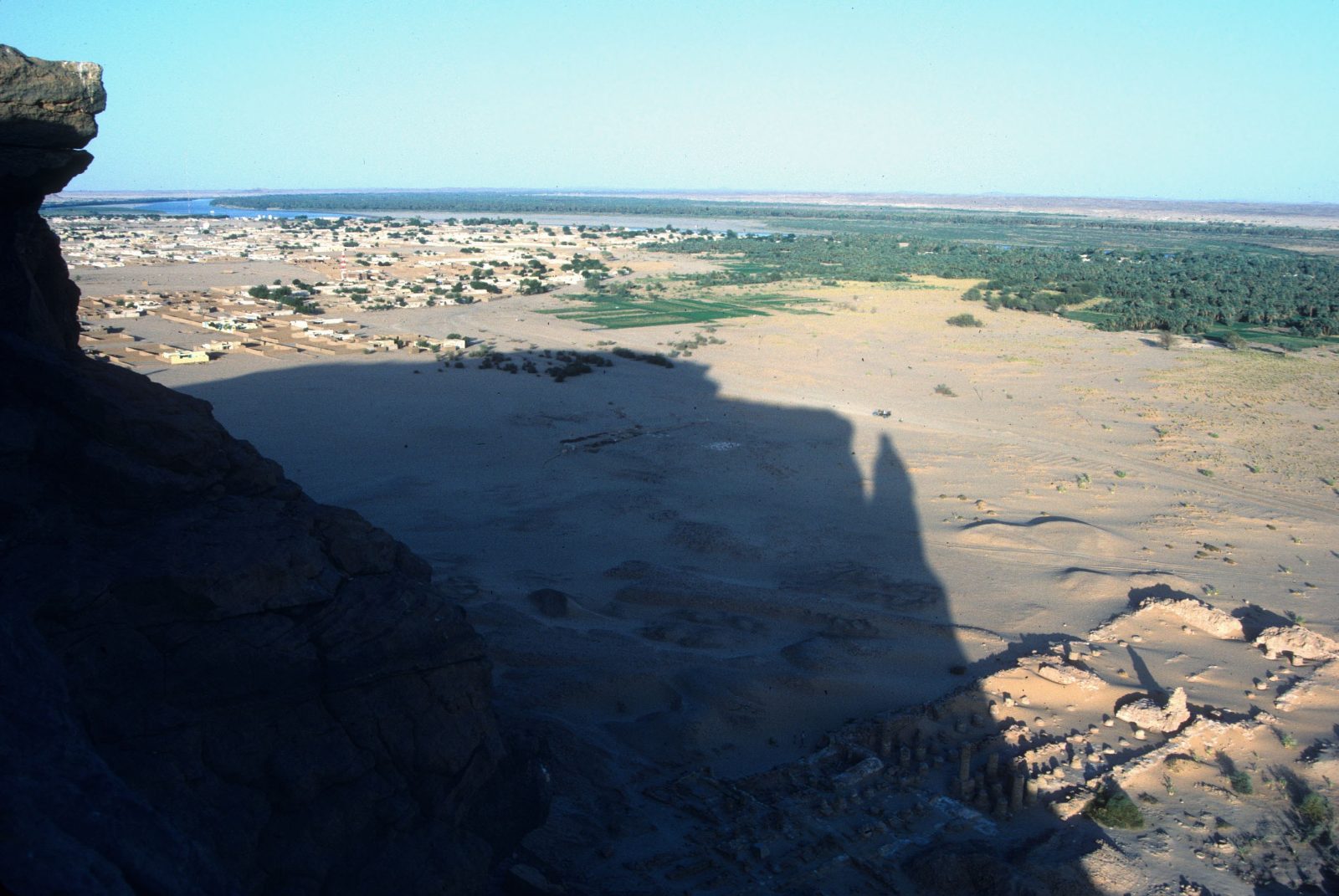
The holy mountain of Napata, where Kushite kings were crowned beneath a pinnacle read as a rearing cobra.
The archive documents heritage; it does not confirm that travel is safe. Read current travel advice before planning a journey. Travel advice
- Status
- UNESCO World Heritage, inscribed 2003 (ref 1073)
- Height
- Rises about 100 m above the plain
- Region
- Northern State, near Karima
- Sacred to
- Amun, from the 15th century BC
The mountain that made kings
Gebel Barkal and the Sites of the Napatan Region were inscribed by UNESCO in 2003. The flat-topped sandstone hill rises about 100 metres above the surrounding plain, and for well over a thousand years it was the most sacred place in the Nile valley south of the cataracts — the dwelling of the god Amun, and the site at which the legitimacy of a Kushite king was confirmed.
A cobra in the rock
At the mountain's southern corner a freestanding pinnacle juts from the cliff. Ancient viewers appear to have read it as a rearing uraeus — the royal cobra — and the temples were laid out in relation to it. Inscriptions carved high on the pinnacle's face show that people climbed it, which at that height was no small undertaking.
Napata
Below the mountain stood Napata, the religious capital from which the Kushite kings of the Twenty-fifth Dynasty ruled. The Great Temple of Amun at its foot is among the largest ancient temples in Sudan. Nearby are the Temple of Mut, cut partly into the rock and still carrying painted decoration, and the palace of King Natakamani.
Pyramids at the foot
Two pyramid fields stand within the property, at Barkal itself and at el-Kurru and Nuri across the river, where the earlier Napatan rulers were buried — including Taharqa, whose pyramid at Nuri is the largest of them all. Together with Meroë they trace the whole arc of Kushite royal burial across roughly a thousand years.
Going there
Barkal is about 400 km north of Khartoum near the town of Karima, above the Nile's great bend. The climb to the summit takes twenty minutes and is best done in the last hour of daylight, when the temples below fall into shadow and the river turns metallic.