The halls of Sudanese memory

The Museum

The halls of memory.

Seven thousand years under one roof — statues of the Black Pharaohs, rescued temples, painted Nubian saints, the swords of sultans, and the everyday objects that never stopped being made.

The great rescue · 1964

Temples that outran a lake.

When the rising waters of Lake Nubia threatened the monuments of the north, engineers and archaeologists cut whole temples from the rock and carried them, block by numbered block, to the garden of the National Museum in Khartoum — where they stand today beside an artificial channel of the Nile they were built to watch.

Rescued · Middle Kingdom

Buhen Temple

The fortress temple of Horus from the second cataract — its painted columns crossed 300 km to safety.

Rescued · 18th Dynasty

Semna & Kumma

Twin temples that faced each other across the Nile's narrowest gorge — reunited now on one lawn.

Rescued · frescoes

Faras Cathedral

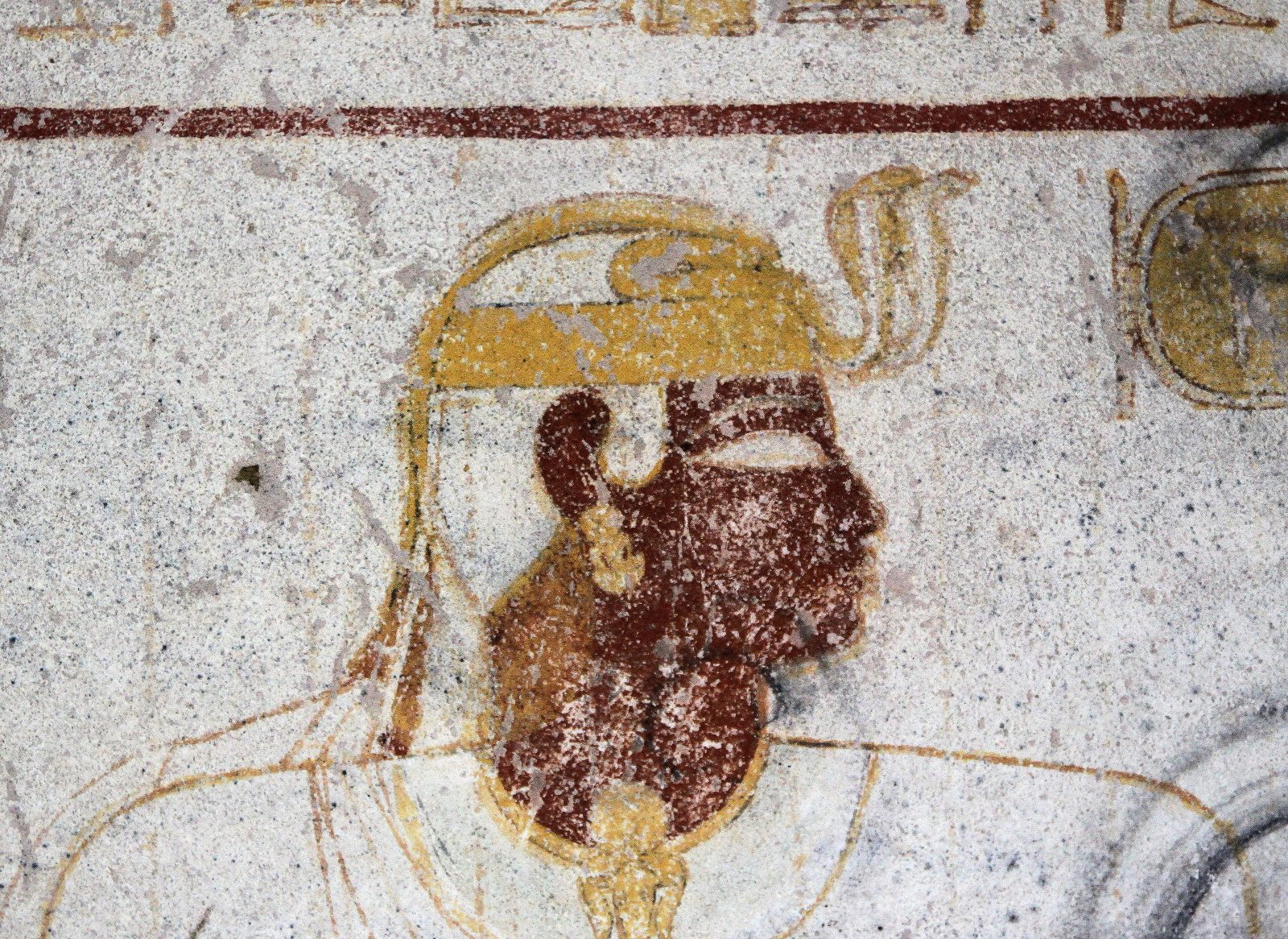
The painted saints of Christian Nubia, lifted from a buried cathedral — a gallery of faces a thousand years old.

Four halls

Walk seven millennia.

IHall of Kush

2500 BC – 350 AD

The Hall of Kush

The colossal granite statues of the Black Pharaohs — Taharqa, Anlamani, Aspelta — stand shoulder to shoulder, brought from the holy mountain. Around them, the gold of the queens and a script no one has fully read.

  • Statues of the 25th Dynasty — the kings who ruled from Napata.
  • The gold of Gebel Barkal — jewellery of the kandakes, the warrior queens.
  • Meroitic tablets — Africa's oldest written alphabet after Egypt's, still only half-deciphered.
  • The ram of Amun — the god who lived inside the mountain.
II

The Faras frescoes

Photograph coming soonالصورة قريباً

6th – 15th century

The Hall of Christian Nubia

For nine hundred years three Nubian kingdoms prayed in painted cathedrals along the Nile. Their bishops, their queens-mothers, their dark-eyed archangels survive on lifted plaster, gazing out of a drowned world.

  • The Faras frescoes — saints and royalty in ochre, ivory and violet.
  • Old Dongola grave stelae — Greek and Old Nubian prayers in stone.
  • Ceramics of Makuria — the finest painted pottery of medieval Africa.
III

Regalia of the Sultanates

Photograph coming soonالصورة قريباً

1504 – 1916

The Hall of the Sultanates

The Blue Sultanate of Sennar and the Fur Sultanate of the west ruled the crossroads of Africa for four centuries. Their swords, manuscripts and royal drums tell of caravans that reached Cairo, Mecca and Timbuktu.

  • The regalia of Ali Dinar — the last sultan of Darfur, from his palace at El Fasher.
  • Funj manuscripts — chronicles of the Black Sultanate of Sennar.
  • Beja crossed swords — the blades of the eastern hills, still danced with today.
  • The Mahdi's banners — embroidered standards from Omdurman.
IVThe Living Hall

Ethnography · today

The Living Hall

The newest hall holds the oldest habits: objects still warm from use. Nothing here is behind glass in spirit — walk out of the museum and every one of them is waiting in a market, a courtyard, a wedding.

  • The tabag — coiled palm baskets, sunset-dyed, from Kordofan and Darfur.
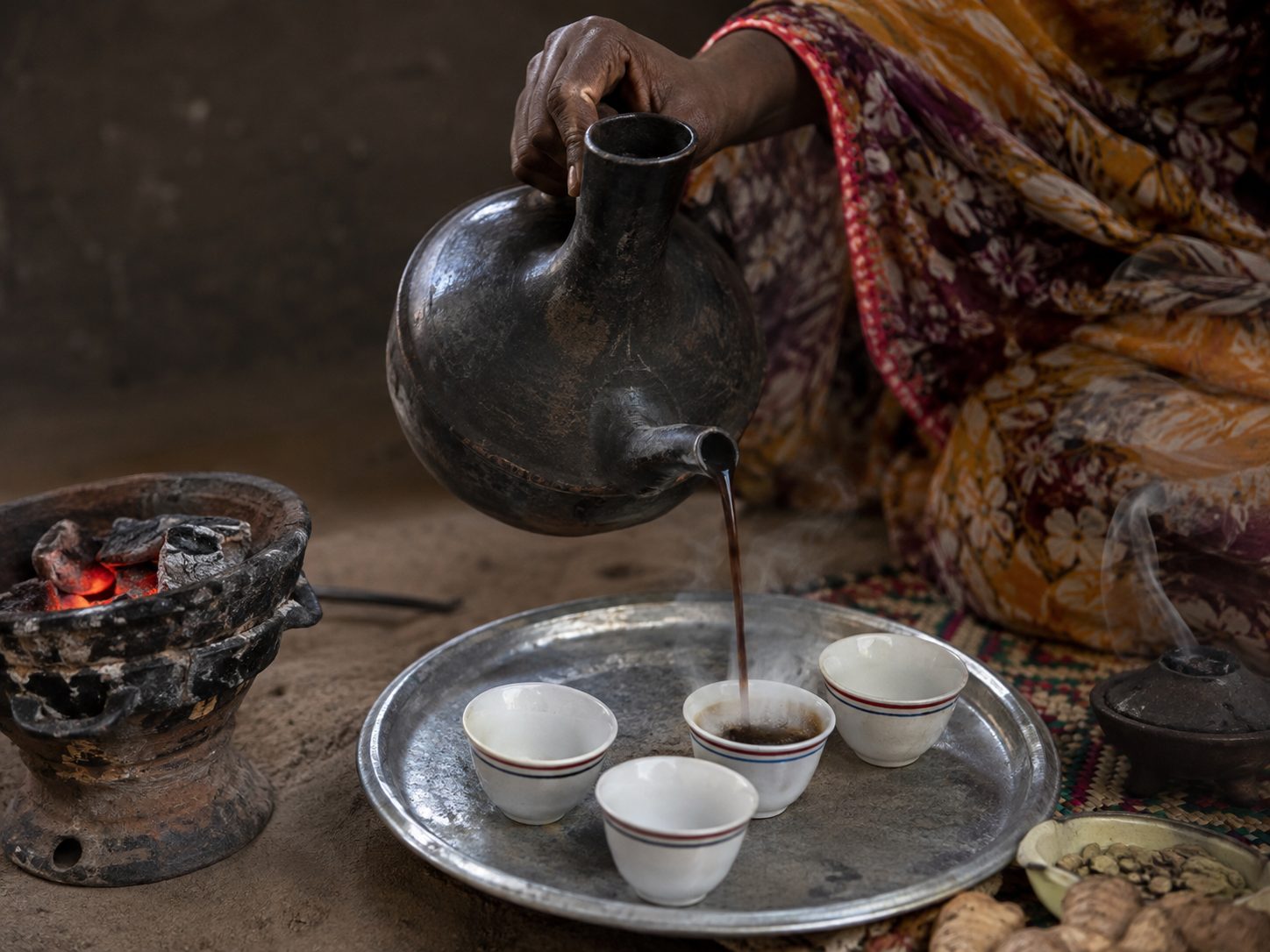
  • The jebena — the clay coffee pot and its brazier, three rounds, no refusal.
  • Nuba wrestling regalia — ash, beads and three thousand years of sport.
  • Bridal henna tools — the week-long geometry of joy.

Across the country

Four doors to open.

Khartoum

National Museum of Sudan

The flagship — Kush, Nubia, and the rescued temples in the garden by the Nile.

Omdurman

Khalifa House Museum

The Mahdist state, room by room, in the Khalifa's own residence of 1887.

El Fasher

Ali Dinar Palace Museum

The last sultan's palace — carved doors, royal drums, the memory of Darfur's court.

El Obeid

Sheikan Museum

Kordofan's story — from prehistoric tools to the battle that shook an empire.

New · interactive

A pyramid you can turn.

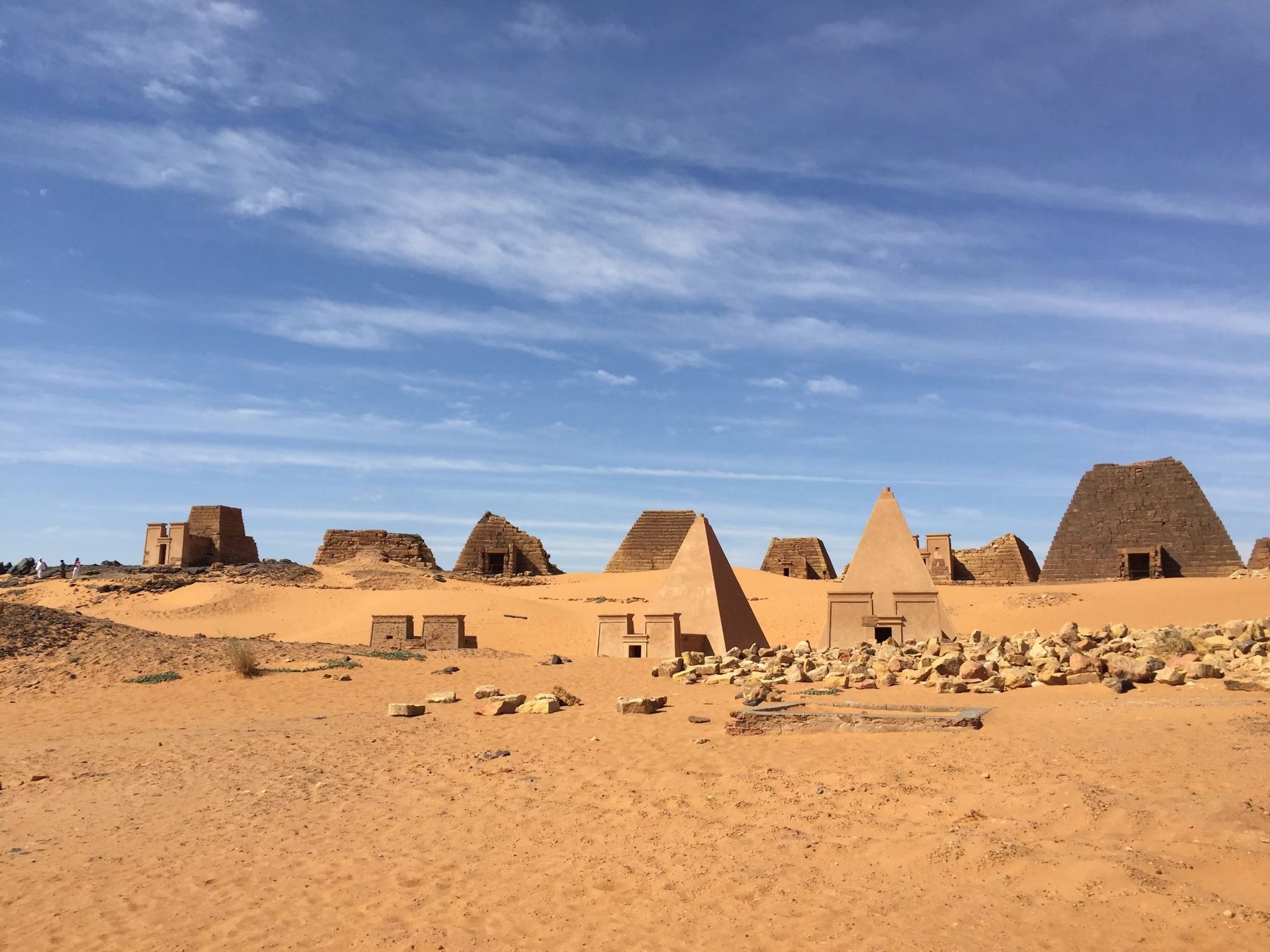
Open Meroë in 3D