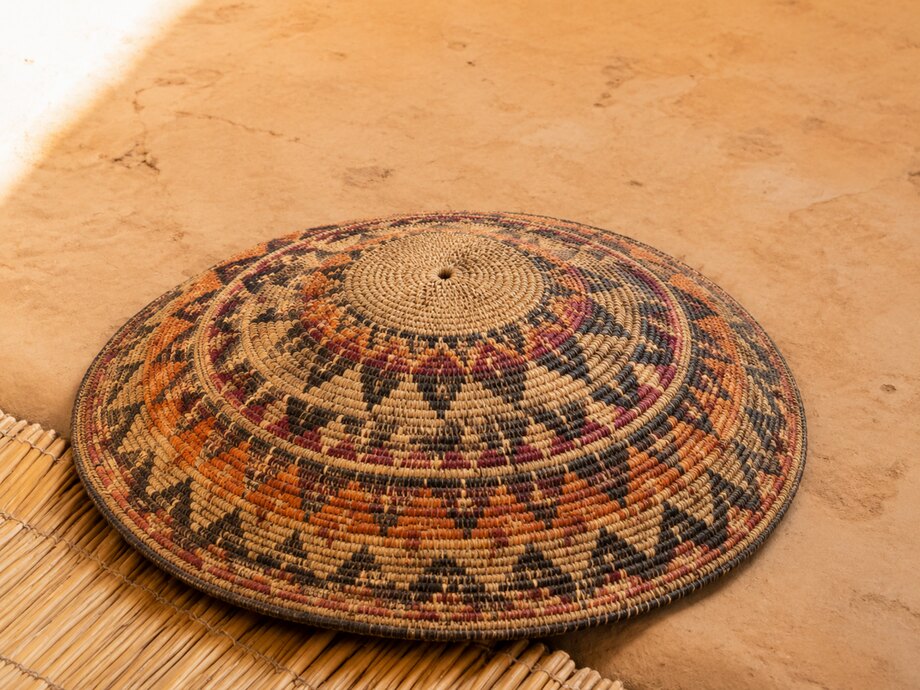
Tabag
Woven baskets
Hand-coiled palm fibre dyed in sunset reds and indigo — made in every village, gifted at every wedding.
Heritage
A country you can know by its objects — baskets the colour of sunset, doors painted by hand, the slowest cup of coffee on earth.
Every woven basket, painted door, clay pot and ritual carries Sudan's genius — alive in the hands of weavers, potters, henna artists and coffee makers. These are not museum pieces, but a living culture.
Tabag
Hand-coiled palm fibre dyed in sunset reds and indigo — made in every village, gifted at every wedding.
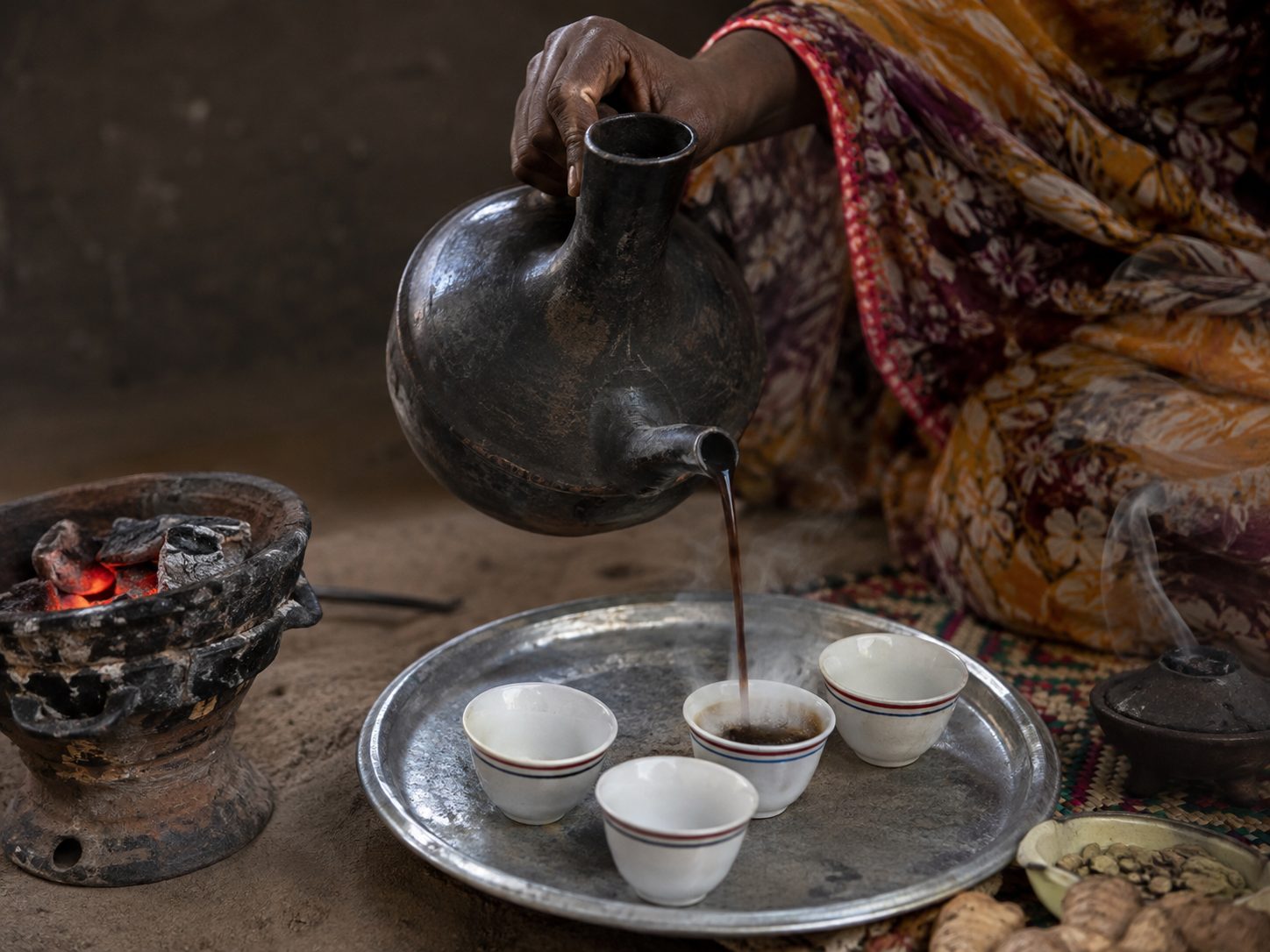
Jebena
Roasted beans, ginger, cardamom, cloves — boiled three times, drunk slow on a small carpet. Refusing is impossible.
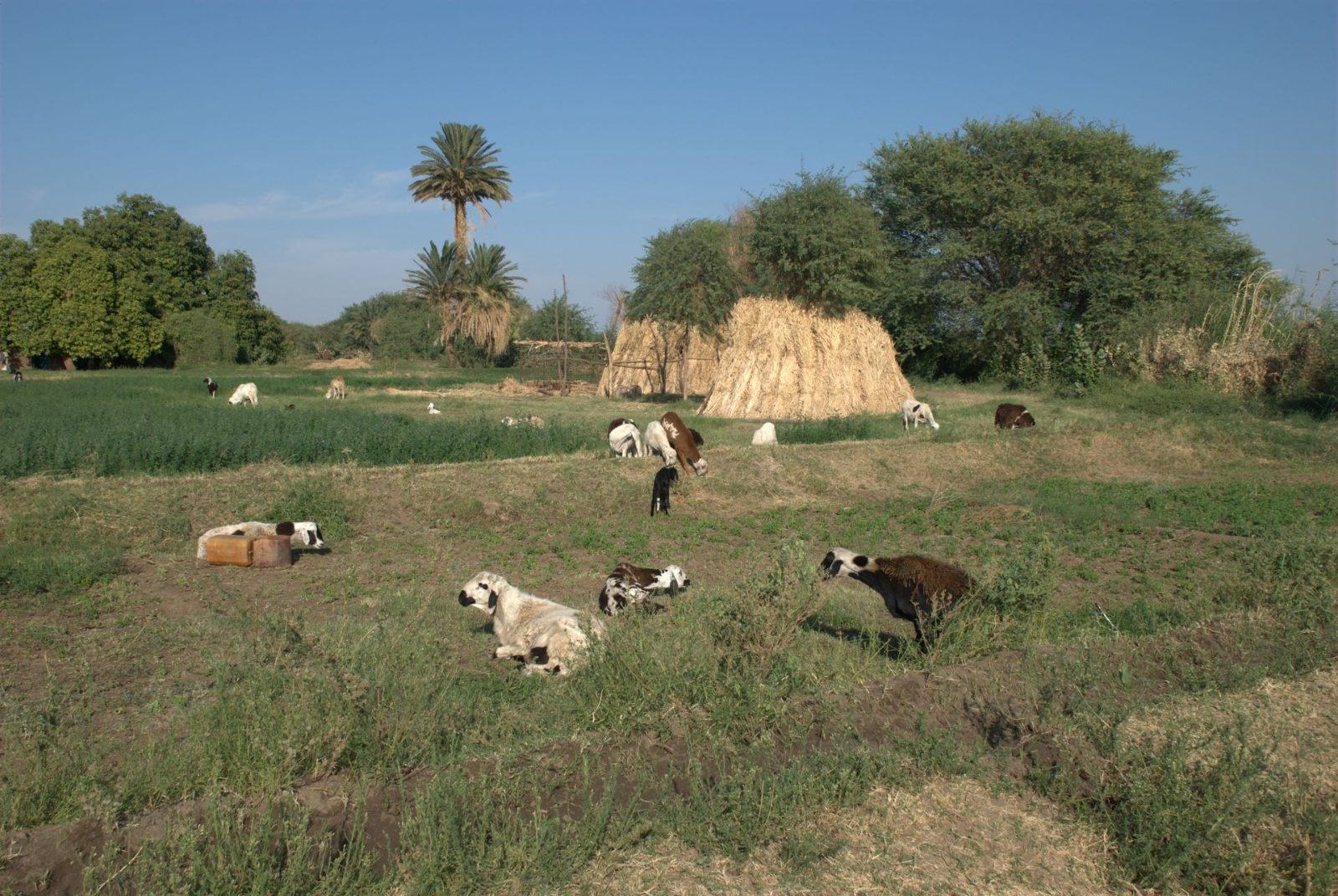
Bāb Nūbī
Bright blue, ochre and red — protection, blessing, welcome. Each door tells the family who lives behind it.
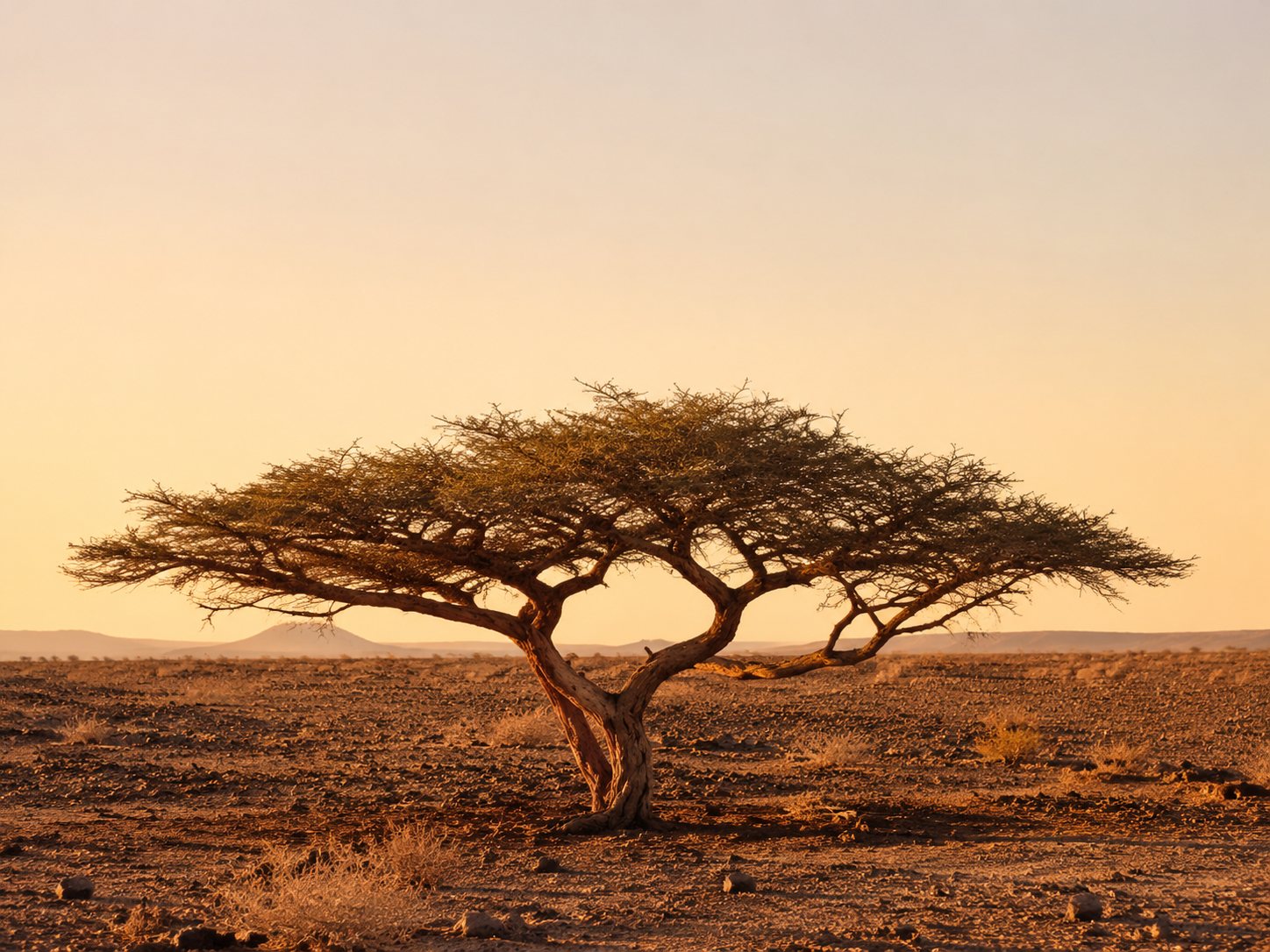
Sayyāl
The umbrella thorn — Sudan's national tree, shading caravans for four thousand years. It bleeds gum arabic, the country's old gold.
Saqr al-katāba
Long-legged, snake-hunting, crowned with quills like a scribe's pen. It walks the southern savannah with the dignity of a magistrate.
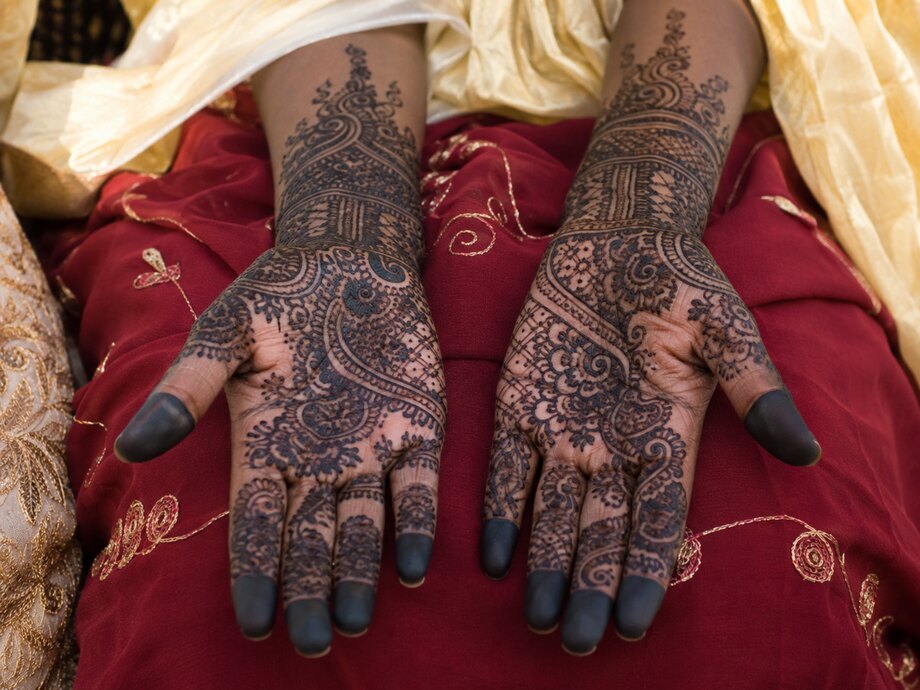
Henna
Black henna patterns on hands and feet — a week-long Sudanese wedding ritual older than the cities it is drawn in.
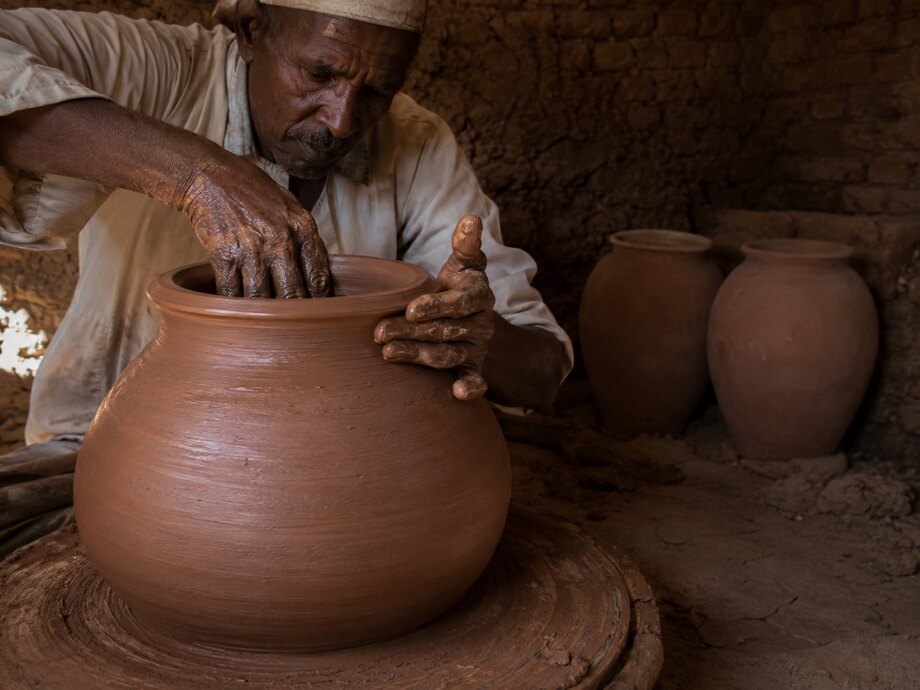
Fakhār
Nile clay thrown into zeer water jars and jebena pots — a craft unbroken since Kerma fired the first kilns in Africa.
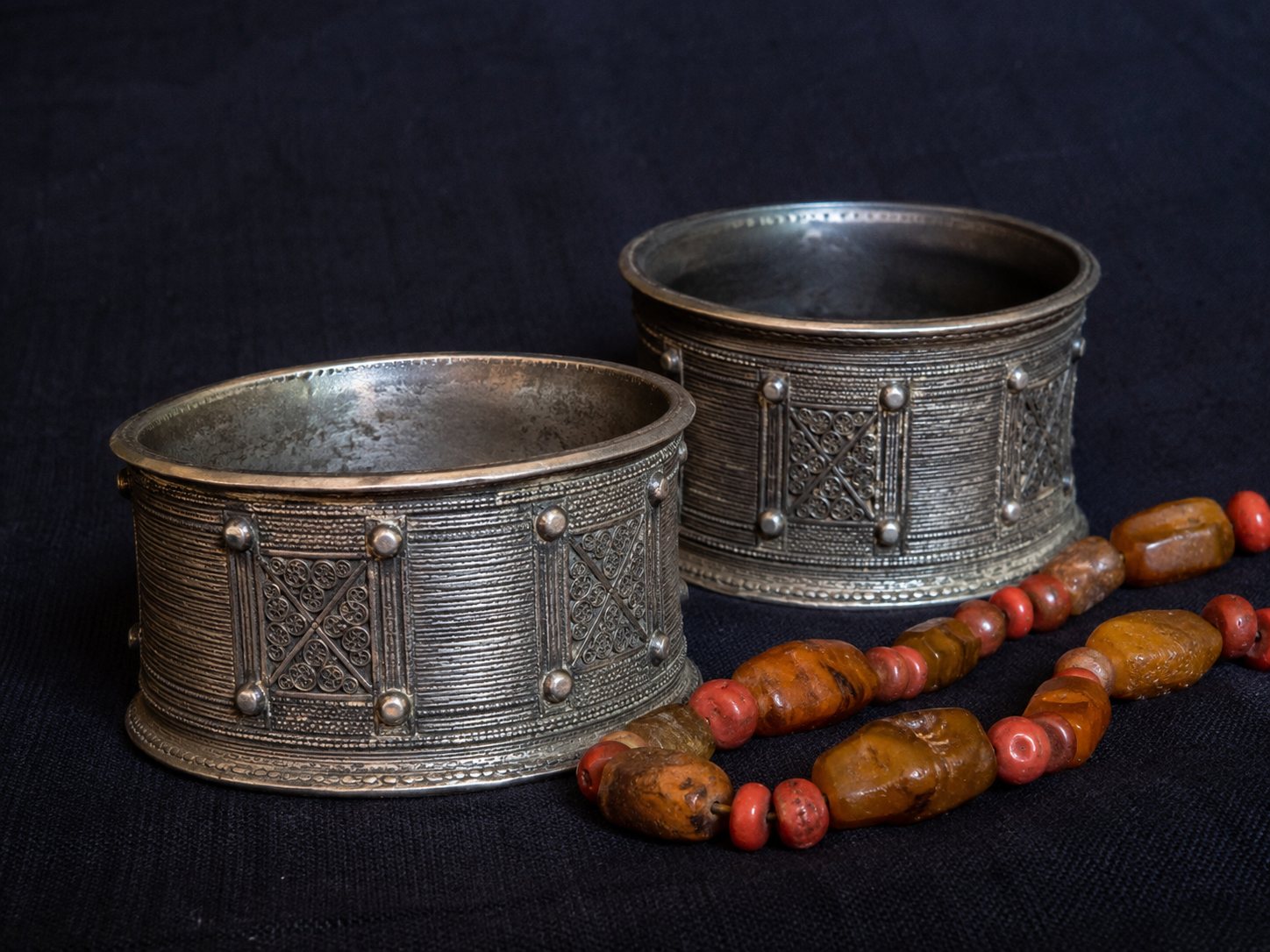
Fiḍḍa
Filigree bangles, amber and coral — a bride's silver is her own property, worked by hands that learned the patterns from their mothers.
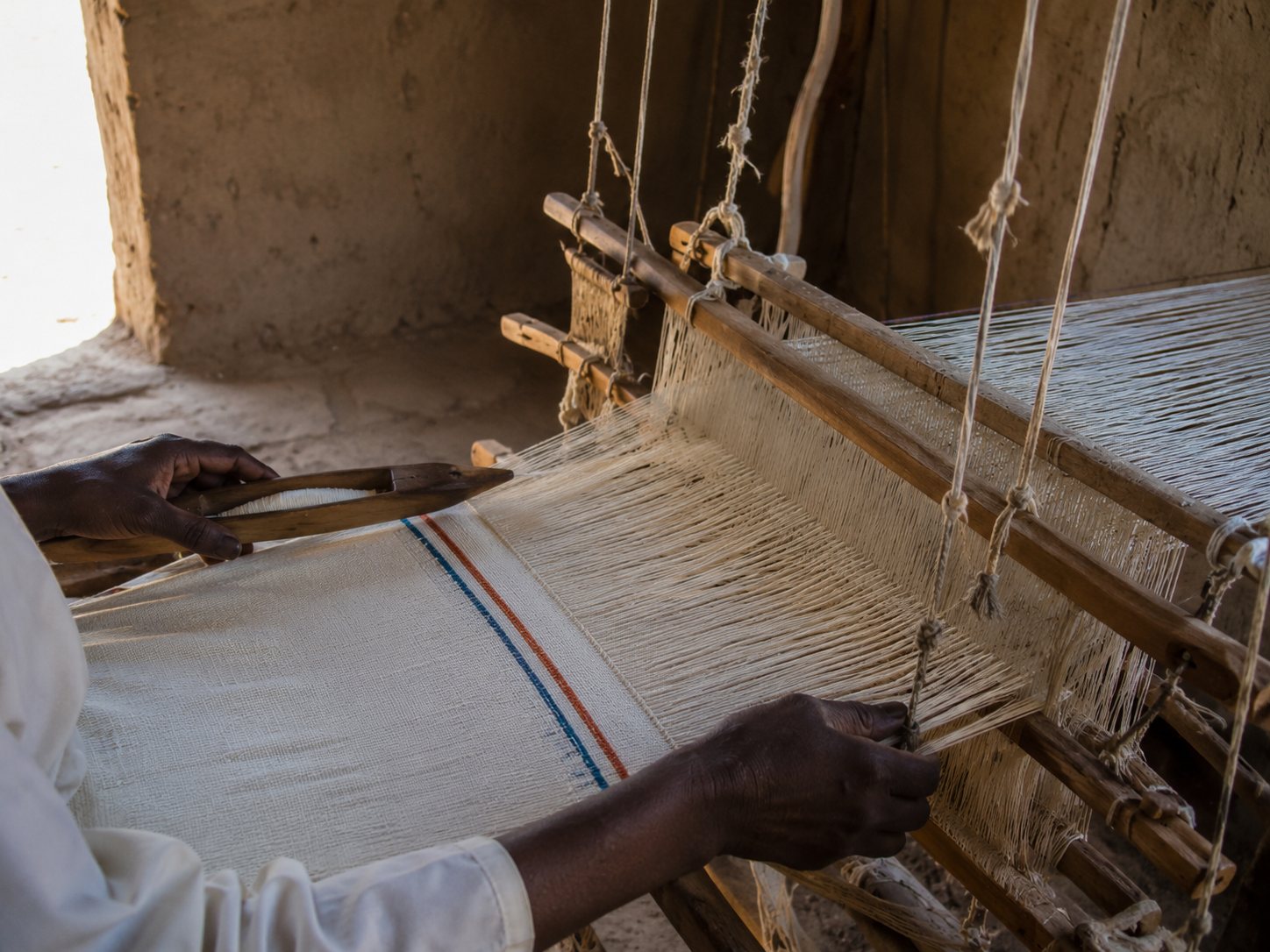
Nasīj
Sudanese cotton woven into the tobe and the jallabiya — one shuttle, two coloured threads, a whole country's dress.
Zayy Qawmī
The jallabiya — a wide white cotton robe cut for heat, worn with the imma, a long turban wound over an embroidered cap, and markoub leather sandals. White because it turns the sun away, and because arriving clean is a courtesy to your host.
Tobe
Nine metres of cloth, unstitched, wound and shouldered without a single pin. Each pattern carries a name — and Sudanese women have long chosen those names as commentary: on a wedding, a harvest, an election.
"Whoever drinks from the Nile is bound to return."Sudanese proverb